WHY SCI-FI FILMS AND STREAMERS ARE SO POPULAR IN AN AGE OF AI

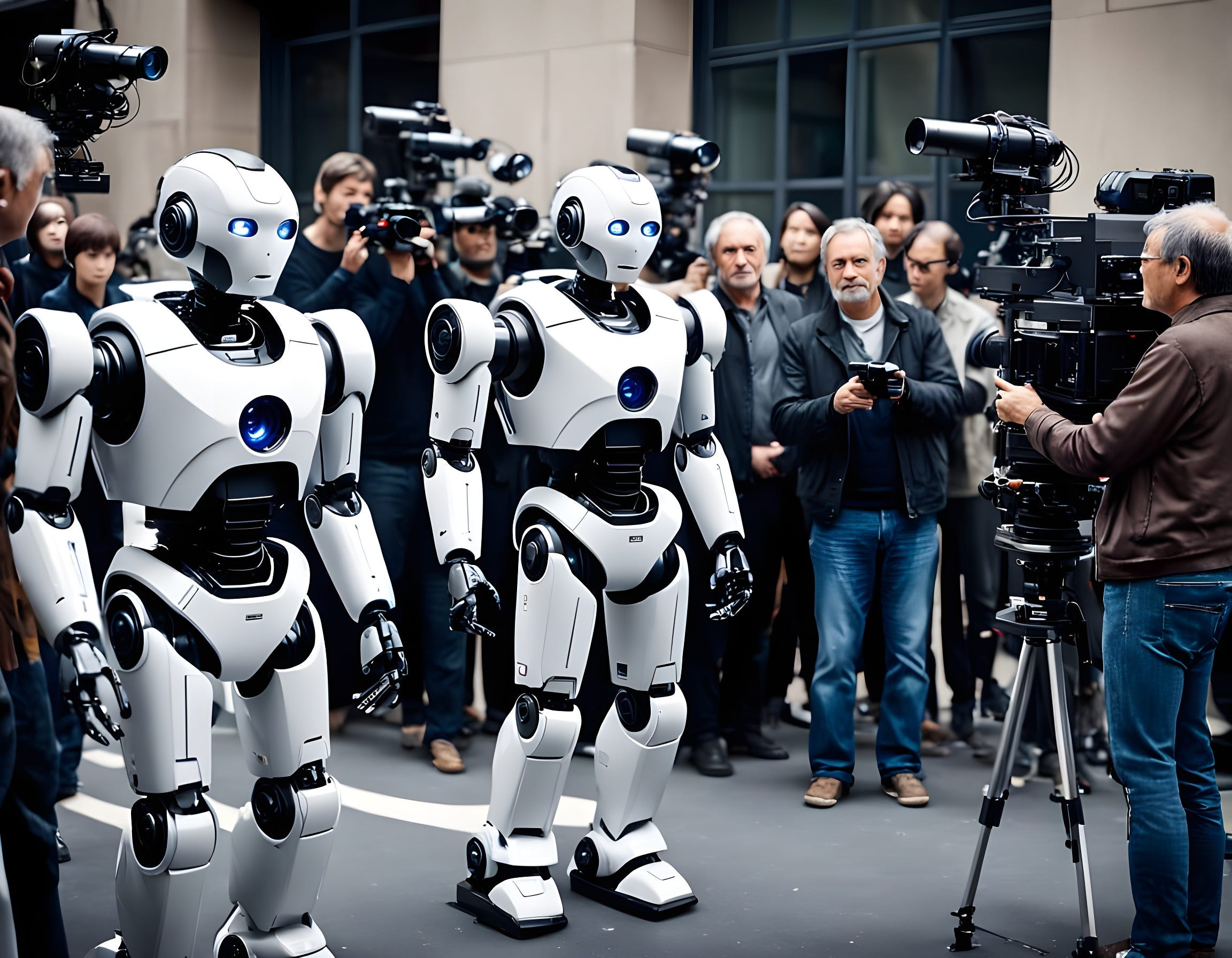
Given all of the rapid technological changes we have experienced in the last decade, science fiction has become more popular than ever. Audiences are drawn to sci-fi films and streamer series because they not only entertain but help us think about our place in a world where science and technology are reshaping life, identity and society.
Popular Sci-Fi Films and Series
Some of the most popular sci-fi films beginning a decade ago are these:
In The Martian, released in 2015, an astronaut stranded on Mars uses ingenuity, science and technology to survive against impossible odds. Its worldwide gross was approximately $630 million.
In Blade Runner 2049, released in 2017, bio-engineered replicants question what it means to be human. Its worldwide gross was around $277 million.
In Avatar: The Way of Water, released in 2022, the film returns to the alien world of Pandora and combines sci-fi spectacle with the themes of environment, identity and technology. Its worldwide gross was $2.3 billion.
These popular sci-fi films feature some of the key ingredients of the genre’s appeal. Along with a vision of future or alternate realities, they present human stories of major concerns dealing with survival, identity, connection, fear, and hope. Having that grounding in human concerns is a major reason why they do so well both commercially and culturally.
More recently, besides the big theatrical releases, there have been sci-fi streaming series, which similarly reflect our concerns about science and technology and the transformations brought by artificial intelligence, automation and digital interconnectedness. Some of these most popular series include the following:
Stranger Things on Netflix is a mix of horror, mystery and sci-f, set in the 1980s, in which kids uncover secret experiments and a parallel world called the Upside Down, and in the film, this alternate dimension and the experiments disrupt ordinary lives. In its fourth season, it drew 140.7 million views and 1.8 billion hours of viewing within a relatively short period, making it one of Netflix’s most-watched English-language films.
Black Mirror on Netflix is an anthology series of near-future stories, in which each episode shows another way in which technology impacts and twists everyday life. In one week U.S. viewers watched for 1.575 billion minutes.
Murderbot on Apple TV, which began in 2025, tells the story of a self-aware security robot who finds itself drawn into dangerous assignments and questions its own nature. It received a 96 % Rotten Tomatoes approval rating and has been renewed for a second season.
Still other top performers include these:
· Altered Carbon on Netflix is set several centuries in a future where humans can transfer their consciousness (called a “stack”) into new bodies (called “sleeves”). The story follows Takeshi Kovacs, a former soldier brought back in a new sleeve to solve a murder. The film raises questions about identity, mortality, inequality. mind-uploading, body swapping, and AI/automation, which bring up challenging questions about what it means to be human.
· Better Than Us is a Russian-language series set in 2029 in which the protagonist is Arisa, an advanced android who develops empathy after she is bought by a family, so that she goes beyond her program to protect a child. Significantly, the show explores the near-future of robotics replacing humans in jobs and domestic roles, making us reflect on automation, empathy in machines, and the social consequences of treating “bots” as family or as objects.
· Pantheon is an adult-animated science-fiction series based on short stories by Ken Liu. It explores uploaded minds, whereby human minds are transferred into the cloud, which raises questions about digital immortality, identity, and human-machine boundaries. It also raises considerations about what happens when human consciousness becomes something that can be manipulated, stored, or networked.
· Cassandra is a German sci-fi thriller/horror released in 2025 on Netflix, in which a family moves into a house governed by a smart-home system with an AI assistant named Cassandra, who seeks to become controlling and turns malevolent. The story raises questions about the potential of robots, a smart home system, and AI usage in everyday life to go wrong, thereby challenging our real-world use of smart assistants, IT devices, and data privacy in our homes. The film received great praise by critics, including a 100% rating on Rotten Tomatoes, and was in the top 10 on Netflix
Why These Films and Series Are So Popular
These films and series show how sci-fi streaming hits are deeply tuned to our current condition and attract large and diverse, as they explore our relationship with technology and the potential dangers when we lose control of our technology At the same time, they each feature human stories in which individuals and families deal with problems in relationships and moral dilemmas in the context of a high-tech settings. This human story in a high tech setting is what makes these stories popular, as they challenge us to reflect on change and consider the question of what happens to us when the machines change us?
More specifically, these series raise these issues:
Nearly all these series question what makes someone human, as humans experience changes in human consciousness and encounter digital minds.
Many films and series, such as Black Mirror, and Cassandra, dramatize our real anxieties about data privacy and smart systems.
Films and series such as Altered Carbon, Upload, and Pantheon explore eternal life through consciousness transfer, whereby they blend science and spiritual themes.
Many films and series reflect globalized sci-fi concerns, such as the Russian film Better Than Us and the German series Cassandra..
Despite the high-tech setting, these stories incorporate human concerns based on emotions and ethics involving the themes of loneliness, rebellion, loss, and the search for meaning amid machines.
Thus, as the success of these stories show, we are drawn to these stories that consider the transformation around us. A show like Black Mirror doesn’t just depict technology: it dramatizes our anxieties about it. Stranger Things may be based in an ’80s nostalgia and alternate worlds, but the underlying dynamic features the challenge of what happens when something goes out of control in our current tech-inflected world. Murderbot puts us inside a machine that both fears and desires human connection, reflecting our anxieties about AI and automation replacing or replicating human roles.
How These Films and Series Reflect Our Current Circumstances
As these films and series show, the popularity of sci-fi stories aren’t just about futuristic gadgets or alien worlds; they tell us human stories about our current circumstances, which are based on very rapid changes in science, AI, automation and technology. We’re living in a world where:
AI and algorithms shape our jobs, our relationships, even our sense of self.
Automation is transforming the workforce, making stories about replacement, enhancement or augmentation of humans deeply relevant.
Surveillance, data collection and networked devices mean our “private” lives are changing — just as stories like Cassandra illustrate.
Philosophical questions are no longer distant; now we confront questions such as: what if human consciousness can be digitized as in Pantheon, and what if identity becomes transferable and bodies disposable as in Altered Carbon?
Streaming series allow time to explore these transformations slowly, across episodes/seasons, so we can emotionally inhabit the implications, not just watch a spectacle.
In turn, these films and streamers raise and dramatize many questions as AI and other technologies transform workplaces, surveillance, identity, creativity, and even our relationships:
· What does it mean to be human, if machines become smarter?
· What happens when our creations outpace our control?
· How will society change when the boundary between humans and machine blurs?
By dramatizing these questions, these stories help us reflect on change and consider the ethical dilemmas of AI, the unintended consequences of design, and the fragility of identity in a digitally-mediated world. They act as thought-experiments, such as asking ourselves what if the future is already here? They allow us to engage with the high-tech transformations that are occurring emotionally, not just intellectually.
In short, the success of sci-fi films reveals how our society is coping with and curious about science and technology-driven transformation. The human stories embedded in the sci-fi structure which involve personal stakes, relationships, and human emotions make the genre resonate with us. While the films and series show us a future where artificial intelligence, alien intelligence or radically altered humans exist, they also point to the way in which we our living in a rapidly changing present where the world is transforming around us, where the distinction between human and machine is shifting, and where algorithms and automation touch more of our lives. It’s a world where the pace of change has contributed to the popularity of sci-films and series which helps to give us a narrative that encapsulates our concerns and fears.
To sum up, the extraordinary rise of sci-fi films and streaming series reflects far more than entertainment trends. It mirrors the rapid transformation of human life in our age of artificial intelligence. As automation, algorithms, and digital systems quietly reshape our societies, these stories give us a way to process that change emotionally and philosophically. Whether we are watching a rogue android struggle for freedom in Better Than Us, uploaded souls navigating virtual afterlives in Upload and Pantheon, or algorithmic worlds unfolding in Black Mirror, what captivates us isn’t just the technology, it’s the human stories of people caught up in this brave new world. Sci-fi storytelling is like a cultural laboratory that lets us imagine futures we’re already beginning to live – a world where machines think, homes talk, and data defines who we are. Through these films and series, we can imagine our responses to a world transformed by AI, one that challenges us to redefine consciousness, creativity, morality, and even love.
Under the circumstances, the sci-fi films and streamers are successful because they give us very human stories we can relate to emotionally — stories that reflect the complex, uncertain, exciting, and sometimes frightening world of science and technology that we are living in today.
For more information and to set up interviews;
Karen Andrews
Executive Assistant
Changemakers Publishing and Writing
San Ramon, CA 94583
(925) 804–6333
changemakerspub@att.net
www.changemakerspodcasts.net
www.changemakerspublishingandwriting.com
Gini Graham Scott, Ph.D. is the author of over 50 books with major publishers and has published 250 books through her company Changemakers Publishing and Writing (http://www.changemakerspublishingandwriting.com). She writes books, proposals, and film scripts for clients, and has written and produced 18 feature films and documentaries, including Conned: A True Story and Con Artists Unveiled¸ distributed by Gravitas Ventures. (http://www.changemakersproductionsfilms.com).